Sports
Many homeschoolers enjoy sports as part of their homeschooling curriculum and lifestyle. More and more sports leagues are forming to meet the specific needs of homeschooling families. Explore some of the options available to you and your family.
Homeschool Sports Leagues
Homeschool Basketball USA
Homeschool Basketball USA is a member of the National Christian Homeschool Athletic Association (NCHAA). This site is dedicated to providing news links, resource links, opportunities, information, and more about homeschool basketball across the USA, as well as to promote its growth and development.
Home School SportsNet
This homeschool sports league supports homeschool parents, athletes, coaches, teams and organizations through means of an interactive website, newsletters, workshops and free postings. They provide national athletic events for homeschool students in a Christian environment. They offer encouragement to new start-up teams as well as established organizations with online materials and resources. They also have partnered with other organizations to offer sports insurance, uniforms, fundraising resources, and college recruitment.
High School and College Athletics for Homeschoolers
Home School Checklist
This home school checklist from the NCAA Eligibility Center offers an easy to use list of elements needed to evaluate a student's eligibility to play college sports (Division I or II schools).
Home School Toolkit
This comprehensive toolkit publication guides homeschoolers to determine their NCAA eligibility. This pdf file covers classification of the homeschool program, evaluation of home school umbrella programs, transcript information, proof of graduation, a core-course worksheet, a discussion of the evaluation process, and an extensive list of resources for the home educating family.
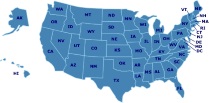
State Laws Concerning Participation of Homeschool Students in Public School Activities
This is a list of states that have addressed issues of homeschooler participation in public school classes, sports,
activities, etc.
Home School Administrator and Accordance Statement
This form should be filled out by the parent administering the home school program for their NCAA-eligible student wishing to pursue collegiate-level sports.
NCAA Guidelines for Home School Students
The National Collegiate Athletic Association (NCAA) is a voluntary organization through which the nation's colleges and universities govern their athletics programs. If you want to play NCAA sports at a Division I or II school, you need to register with the NCAA Eligibility Center if you were home schooled for any part of high school. If you are planning to attend a Division III school, you do not need to register with the NCAA Eligibility Center.
Home School Transcript Example
This pdf offers an example homeschool transcript that would be suitable to determine eligibility for NCAA purposes to participate in college-level athletics.
A House Divided: Homeschool Students on School Sports Teams
As the number of high school students who are homeschooled continues to rise, leaders in high school sports across the country face growing interest among these students and their parents to play sports on their local public school teams. Interest continues to build in homeschoolers’ participation on public schools sports teams. In some states, that option exists, although the requirements vary from state to state with some states requiring part-time enrollment in the local school. In other states, the debate continues as to whether homeschooled students should be allowed to play on the local high school team alongside students who attend classes at the school all day long.
So, You Want to Play College Ball?
Good news for homeschoolers who want to receive NCAA (National Collegiate Athletic Association) scholarships and participate in college sports! Homeschoolers have finally been recognized as high school graduates by the NCAA. Homeschool students no longer have to go through the “waiver process,” but can now register in the same manner as “traditionally schooled” graduates.
Looking for Another State?
Featured Resources
As an Amazon Associate, we earn from qualifying purchases. We get commissions for purchases made through links on this site.

For the Good of the Earth and Sun: Teaching Poetry
For the Good of the Earth and Sun is for teachers at all levels, especially for those teachers who feel anxious about introducing poetry to students. Georgia Heard offers a method of teaching poetry that respects the intelligence of students and teachers and that can build upon their basic originality. She explores poetry from the inside as it is: a powerful and necessary way of looking at the world, and one of mankind's most durable inventions. Her book provides detailed, organized information ...
Learning Language Arts Through Literature
Learning Language Arts Through Literature is a fully integrated language arts program that teaches grammar, reading, spelling, vocabulary, writing mechanics, creative writing, thinking skills and more.
A Reason For® Spelling
A Reason For® Spelling combines the latest research on how children learn to spell with all the strengths of traditional programs. It teaches highfrequency base words, plus hundreds of other word forms. Values-based stories set the theme each week and help make spelling fun. You'll find product information about A Reason For® Spelling here.

Great States Board Game
What is the capital of NJ? Where is the Football Hall of Fame? These are just a few of the hundreds of questions players are asked as they adventure around the USA discovering state attractions and landmarks, capitals, state abbreviations, state locations and more. In order to answer the questions on the cards, players must look closely at the colorful USA map game board, becoming familiar with the geography of the country. Players must hurry to find the answers as the mechanical timer ticks. Co...

Kids' Poems (Grades 1)
Regie Routman shares her delightful selection of free verse poems written by first graders that will inspire your second graders to think, I can write poems like this too! Regie provides strategies for using kids' poems as models to guide children to write poems about things they know and care about: learning to skate, disliking asparagus, playing with a best friend, and more. She describes the way she invites children to study the model poem, beginning by asking kids, What do you notice? She sh...